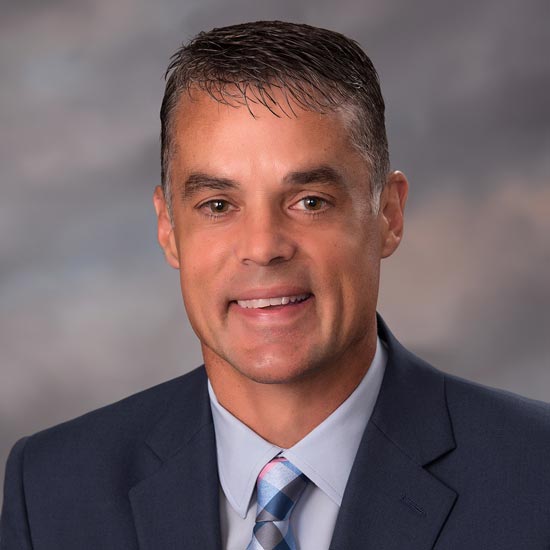

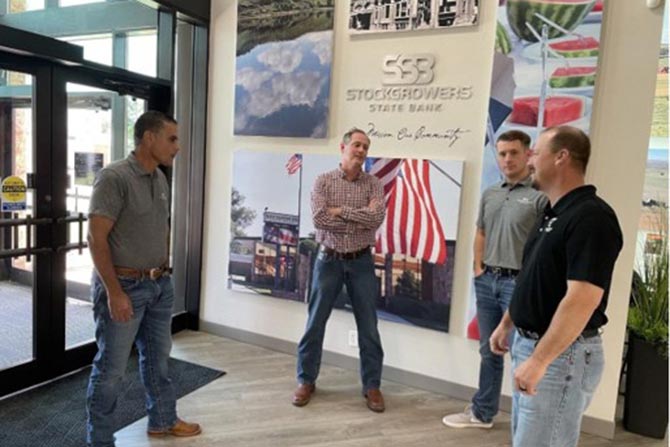
For more than 30 years, Kendal Kay has dedicated his career to serving the people, businesses and agricultural communities of southwest Kansas. As president and CEO of Stockgrowers State Bank in Ashland, he leads one of Kansas’ oldest community banks. Founded in 1885 and owned by the Berryman family since 1899, Stockgrowers State Bank has remained deeply rooted in serving rural Kansas for nearly 140 years. In 2003, Kay became just the sixth president in the bank’s history, continuing a legacy of community banking that spans generations.
Raised in nearby Protection, Kansas, Kay credits his parents with instilling the values that continue to guide his life: work hard, treat people with respect and always give back to your community. Although he originally planned to become an accountant, an unexpected opportunity led him into community banking in 1995. More than three decades later, he continues to build relationships, support local families, businesses and agricultural producers, and champion the future of rural Kansas.
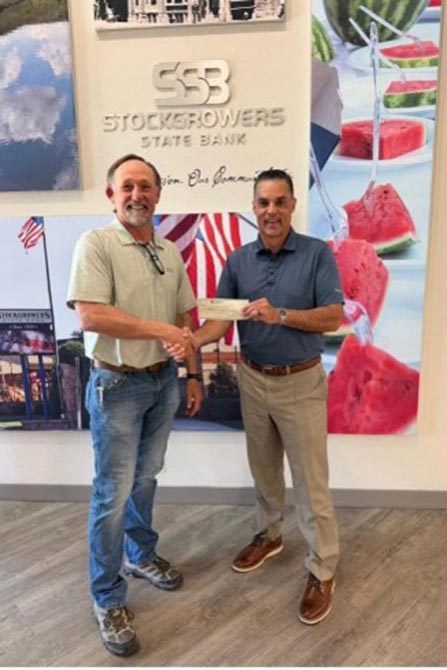
Earlier this year, Kay was recognized by U.S. Representative Tracey Mann as Kansas Ag Hero of the Month, honoring his longstanding commitment to agriculture, rural communities and public service. As he begins his term as Chairman of the Kansas Bankers Association, he brings those same values of leadership, service and collaboration to banks across the state. We recently sat down with Kay to discuss his journey into banking, the lessons that have shaped his career and his vision for Kansas community banking.
Tell us about your roots. How did growing up in southwest Kansas shape who you are today?
I grew up in Protection, Kansas, about 15 miles east of Ashland, so I’ve always considered southwest Kansas home. Growing up, Ashland and Protection were rivals in sports, and I never imagined I’d eventually spend the rest of my life here. Looking back now, I can’t imagine calling anywhere else home.
My parents (Neil and Betty Kay) were hardworking people who led by example every day. My dad worked at the local co-op, and my mom worked several jobs over the years while raising our family. I have two siblings (Jeff and Janell), and while we didn’t have much growing up, we never thought of ourselves as lacking anything because we had family, community and parents who cared deeply about doing the right thing.
One lesson from my dad stayed with me my entire life. He always said, “When there’s work to do, you get to work.” At a very young age, whether I was sweeping floors at the co-op to help Dad, mowing lawns or working on our small farm, I learned early from my parents that success comes from showing up, working hard and doing all you can to take care of your customers and team to build lasting relationships. Those values have shaped everything I’ve done, both personally and professionally.
How did your career in banking begin, and was becoming a banker always part of your plan?
Banking wasn’t my original plan at all. I actually thought I would become an agronomist because agriculture was such a big part of my upbringing. Then, during my senior year of high school, I took accounting. My teacher saw something in me and encouraged me to pursue an accounting degree instead.
I attended Northwestern Oklahoma State University, where I earned my accounting degree and met my wife, Karrie. After graduation, I accepted an entry-level position at a bank in Alva, Oklahoma. It was really just intended to give me some experience while Karrie finished her final year of college.
The opportunity that changed everything came unexpectedly. I was helping my dad one day, and that just happened to be alongside Tom Fellers, who was at the time the president of Stockgrowers State Bank. During that conversation, Tom asked about my plans and encouraged me to send him my résumé. A few months later, he called and invited me to interview.
I started at Stockgrowers State Bank in October 1995, working in operations and as an accountant, doing just about all things operational in the bank as well as the books for the holding company. Karrie still had one year of college remaining, so I commuted between Ashland and Alva (86 miles one way) before we eventually moved to Ashland. Looking back, I can truly see how God had a different plan for my life than the one I had mapped out for myself.

Stockgrowers State Bank has deep roots in southwest Kansas. Can you share the bank’s history and its connection to the agricultural community?
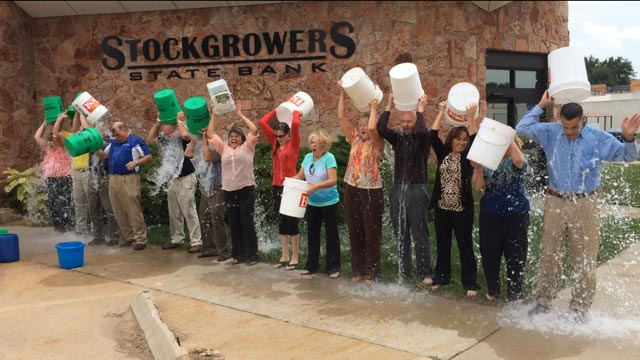
Stockgrowers State Bank has been serving southwest Kansas since 1885, making it one of the oldest community banks in the state. In 1899, the bank was purchased by J.W. Berryman and C.Q. Chandler. Then in 1907, J.W. Berryman purchased controlling interest, and the bank has remained connected to the Berryman family ever since.
One of the things I’m most proud of is the continuity of our leadership. Since the Berryman family acquired the bank in 1899, there have been only six presidents of Stockgrowers State Bank, and I’m honored to be part of that legacy. Stockgrowers is unique in that, although it’s still owned primarily by the Berryman family, there has not been a family member involved in the bank’s day-to-day management since 1974. That level of trust is something I don’t take lightly.
Today, members of the third and fourth generations of the Berryman family continue to serve on our board, providing oversight while allowing our team to manage the bank’s day-to-day operations. That partnership has been instrumental in preserving the bank’s community-focused mission for well over a century.
Our roots are deeply tied to agriculture because agriculture is the backbone of southwest Kansas. While we serve many different businesses and families, nearly everything in our communities connects back to farming or ranching in some way. We understand those customers because we live and work alongside them every day.
Another thing I’m especially proud of is our Employee Stock Ownership Plan. Every member of our team has ownership in the bank, which creates a different mindset. We aren’t just employees; we are owners who are invested in serving our customers and strengthening our communities.
You’ve spent much of your career serving both your bank and your community. How have those two roles influenced one another?
Community banking and community service really go hand in hand.
Early in my career, Tom Fellers encouraged everyone at the bank to become involved in the community. He believed community bankers should give back because stronger communities ultimately create stronger banks. That philosophy stayed with me.
I was elected to the Ashland City Council in 1996 and served for 12 years before spending another 13 years as mayor. Those 25 years of public service gave me opportunities to work alongside so many dedicated people who simply wanted to make Ashland a better place.
Serving as mayor also reinforced something I see every day in banking — leadership isn’t about one person. It’s about bringing people together, listening, solving problems and always looking toward the future. Whether you’re leading a city or a bank, your focus should always be on helping your customers and community thrive, which will ultimately benefit the organization you are leading.
What are you most proud of when you think about Stockgrowers State Bank and its impact on the community?
Without question, it’s our people and the difference they’ve made in the lives of our customers.
I think back to the Starbuck Fire in 2017 and the wildfires we’ve experienced since then. Those were incredibly difficult times for southwest Kansas. Families lost homes, fencing, livestock and livelihoods. Our team stepped up because that’s what community banks do. We worked alongside customers, found ways to help and remained committed to supporting our customers and communities through recovery.
Another defining moment came in 2022 when our own bank experienced a fire. The building suffered significant smoke damage, but I gathered our team that morning and told them we were going to be open for business by 9:00 am. I recognized that while “open for business” might not look the same as it did the day before, we would find a way to serve our customers, and our team responded to the challenge.
One thing I told our team that morning has stayed with me ever since: “Our challenge is not our customers’ problem.” No matter what we’re facing internally, our responsibility is to take care of the people who trust us with their financial future.
That’s what makes me most proud of Stockgrowers State Bank. Every success we’ve had has been because of our team working together towards a common goal. Community banking has never been about one individual; it’s about working together to make a positive difference in the lives of our customers and our communities.
How would you describe your leadership style, and what values have guided you throughout your career?
I’ve always tried to lead by example. One of the greatest lessons I learned came from Tom Fellers, who hired me at Stockgrowers State Bank. He told me years ago, “If you don’t fight for your team, nobody else will,” and my parents lived by the same philosophy. Those words have stayed with me throughout my career. Whether it’s advocating for our employees with our board or standing up for community banks through KBA, I believe leaders have a responsibility to support the people they serve. When your team knows you’ll stand beside them, they’re willing to accomplish incredible things together.
What values and life lessons have stayed with you throughout your career?
My parents taught me the importance of hard work, honesty, building relationships, and treating people and our country with respect. Those lessons have never changed and continue to guide every decision I make today.
My Christian faith has also been a constant source of guidance. One Bible verse I often reflect on is Ephesians 4:32: “Be kind and compassionate to one another, forgiving each other, just as Christ God forgave you.” None of us lives life that perfectly or ever will, but it’s something I strive toward every day. If we approach people with kindness, compassion and grace, we’ll be better leaders, better bankers and better neighbors.
What has banking taught you about trust, relationships and service?
One of the greatest lessons banking has taught me is that trust is earned one relationship at a time. Every opportunity I’ve had throughout my career has been the result of relationships that were built over time, with customers, coworkers, community members and fellow bankers.
Customers place an incredible amount of trust in their community banker, especially in rural communities where you know one another personally. Service is really at the heart of community banking. We help families achieve their dreams by supporting local businesses and investing in the future of our communities.

What does it mean to you to serve as KBA Chairman, and what opportunities do you see for Kansas banks?
It truly is an honor, and I recognize that it would not be possible to serve if I didn’t have an amazing team at the bank and also a very supportive family. There are so many outstanding bankers across Kansas, and I’m humbled to have the opportunity to serve alongside them.
What excites me most is continuing to build on the momentum the Kansas Bankers Association has established. We have an incredible leader and team at the KBA and bankers across the state who genuinely care about their communities. My goal is to build on that work while helping prepare the next generation of banking leaders.
Community banks remain essential to the success of Kansas. Whether someone is buying their first home, starting a business, expanding a farming operation or growing their family, community banks are there every step of the way. We need to continue advocating for policies that allow us to serve our customers efficiently while reducing unnecessary regulatory burdens.
I also believe we have a responsibility to mentor future bankers and encourage young professionals to become involved in their communities and in organizations like KBA. Our industry has a bright future if we’re willing to invest in the people who will lead it next.
Tell us about your family and what you enjoy doing outside of work.
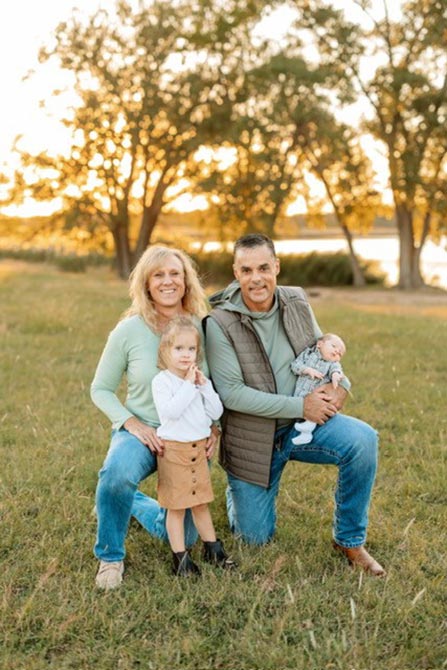
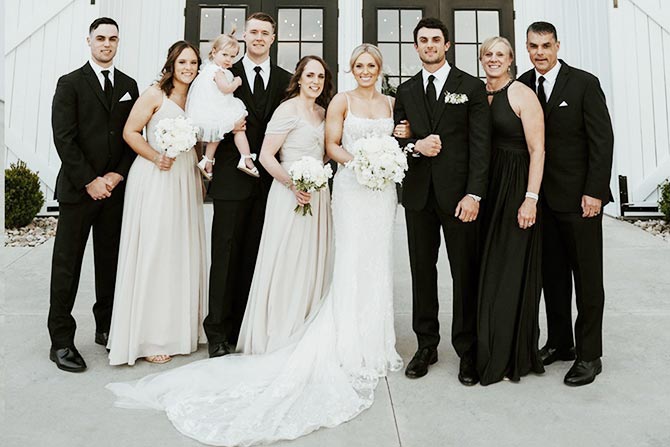
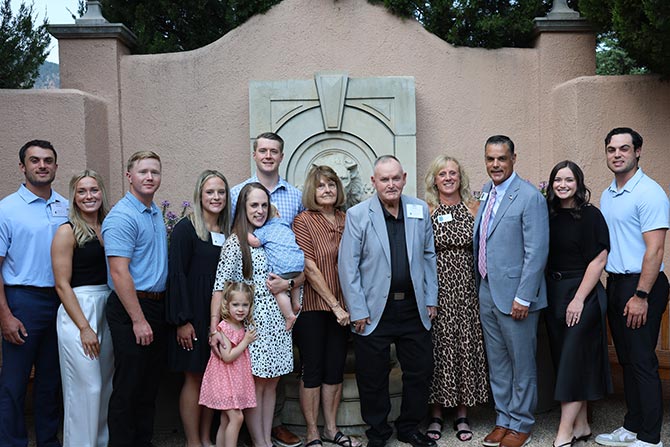
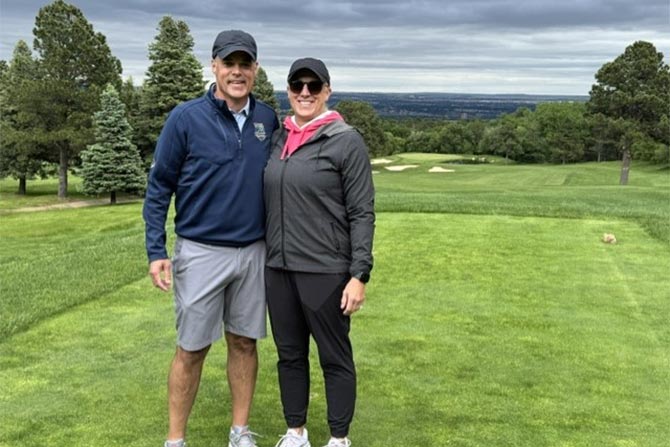
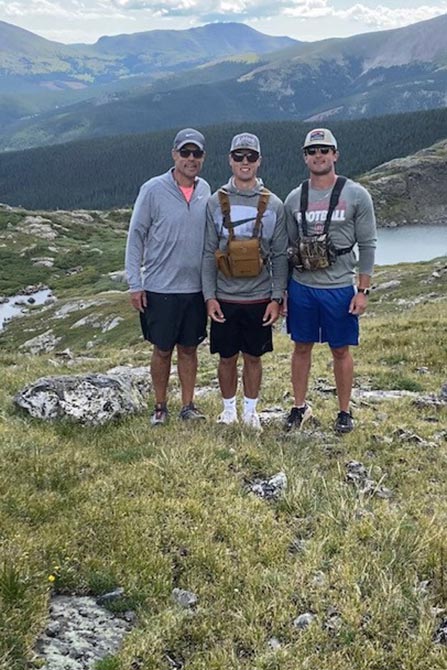
Karrie and I met while attending Northwestern Oklahoma State University, and we’ve built our life together here in southwest Kansas. We’re blessed with four children: Sloan and her husband, Kole Konrade; Reece and his wife, Hannah; Braton and his fiancée, Emily; and our youngest, Kinley, who is currently attending Wichita State University. We’re also proud grandparents to Kora and Kayson Konrade. Family is incredibly important to us, and we cherish every opportunity we have together.
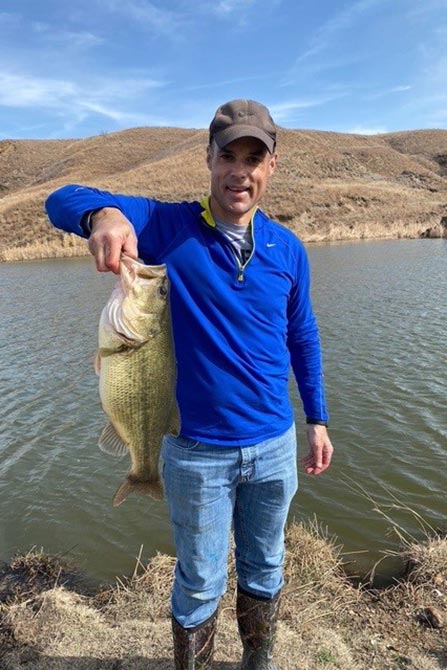
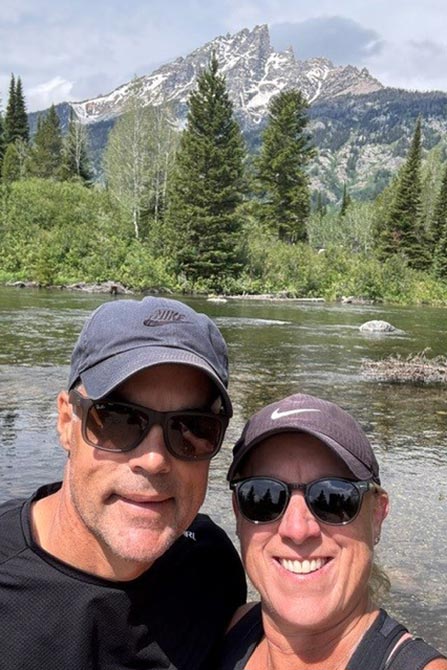
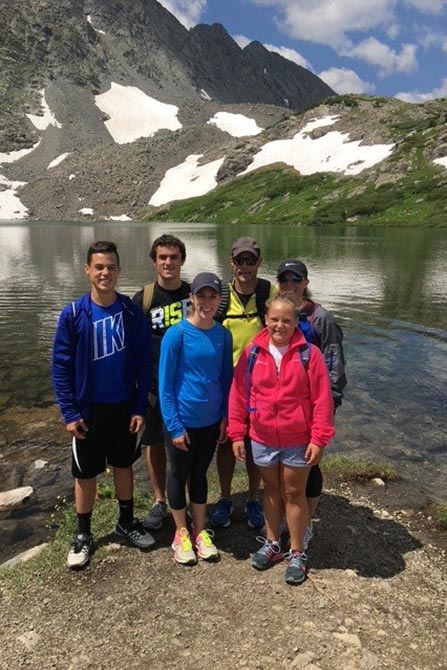
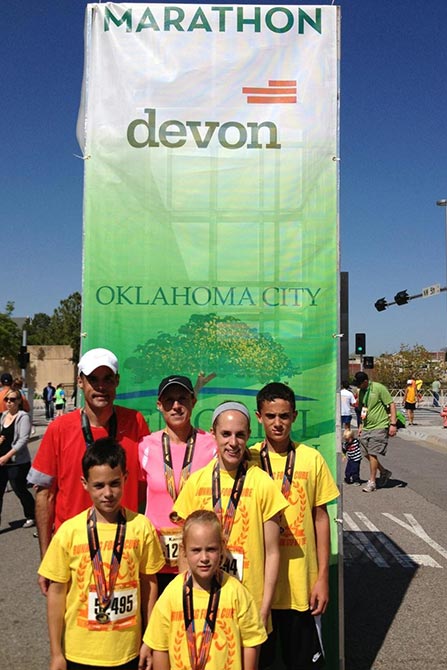
When we’re not working, we enjoy being outdoors. We love hiking, especially in Colorado, and Breckenridge has become one of our favorite places to visit. Karrie and I have also enjoyed running together over the years. Between us, we’ve both completed marathons and half marathons, although these days, we spend more time walking and enjoying the outdoors than training for races.
I’ve never been someone who enjoys sitting still. Whether it’s working in the yard, taking a hike or spending time with family, I like staying active and making the most of every day.
What advice would you give the next generation of Kansas bankers, and what legacy do you hope to leave?
My advice is simple: Work hard, stay curious and never stop learning.
Build relationships wherever you go because those relationships will carry you through both opportunities and challenges. The connections you make with customers, coworkers and fellow bankers will shape both your career and your life.
I’d also encourage young bankers to become involved in their communities. Whether that’s serving on a local board, volunteering or participating in organizations like the Kansas Bankers Association, you’ll gain experiences and relationships that make you a better leader.
When I think about the legacy I’d like to leave, I hope it’s simply that I have helped make community banking stronger for the next generation. I want to leave Kansas banks and the communities they serve better than I found them. If I’ve helped create opportunities for others, supported my team and made a positive difference in the lives of our customers and communities, then I’ll consider my career a success. That’s the perspective I hope to carry throughout my year as KBA Chairman and beyond.